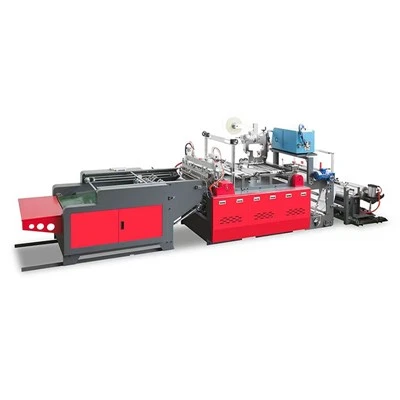
Performance testing of the folding machine primarily involves a comprehensive evaluation of metrics such as operational stability, folding precision, and product consistency to determine whether the equipment meets production requirements. The process typically begins with no-load testing to observe the machine's operation at various speeds and check for issues like vibration, abnormal noise, or unstable transmission, thereby making a preliminary assessment of the mechanical structure's reliability.
During the load testing phase, trial runs are conducted using actual materials, focusing on the uniformity of the fold, dimensional stability, and edge smoothness. Measurements of folding angles, positional accuracy, and compression quality are taken to ensure the machine maintains high processing precision under real-world production conditions. Additionally, the material is monitored for any misalignment or wrinkling during the feeding process.
Performance testing also encompasses the verification of control systems and safety functions. This involves testing the response speed of the PLC control system, the accuracy of parameter adjustments, and the sensitivity of various sensors, while also checking that safety features-such as emergency stop mechanisms and alarm systems-are functioning correctly. Through these comprehensive tests, the machine's overall performance and suitability for actual production can be fully evaluated.